
Resources and Other Helpful Information
Is a German Shepherd Right for you?
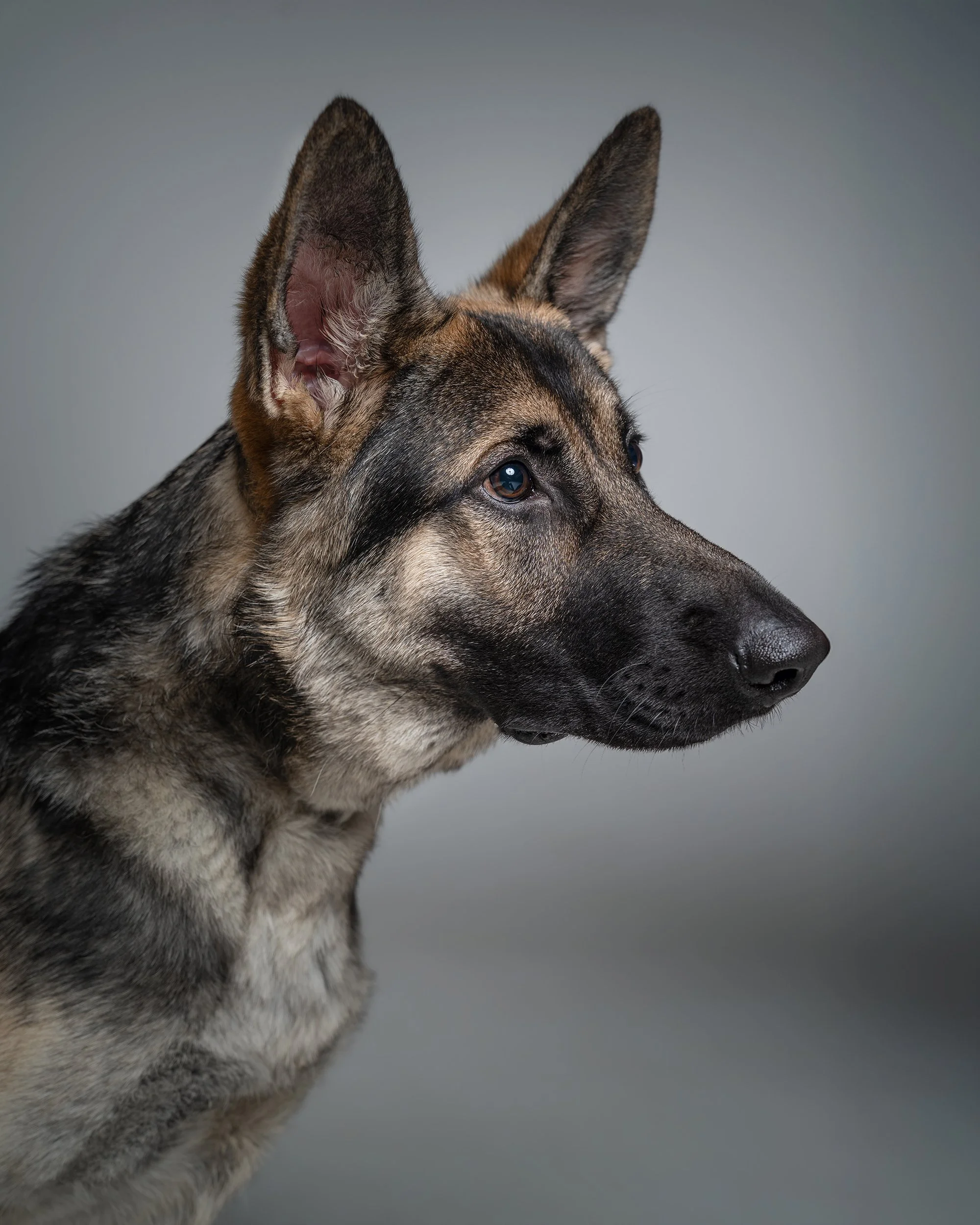
Do you have time, funds, patience and energy for the breed?
If so, then please keep reading.
The German Shepherd Dog or GSD is an energetic, loyal, and smart breed.
WARNING: Once you have fallen in love with the breed it’s hard to go any other way.
Helpful Tips & FAQ’s
-
CATS*****A dog raised with dog savvy cats; that didn't mean any harm, might see those cats as either resources to guard or as pack members. If your cat is fearful and runs, no one knows if a dog will chase due to the cat's prey like behavior. We recommend not placing a dog; with a cat that is not dog savvy, if the cat acts like prey. A cat that stands its ground, that was raised with big dogs and will not attack a dog MIGHT be fine with a new dog. Any dog must be kept safe from a cat that is likely to claw a dog’s face. It is cat dependent. Also, a lead dog will enforce pack order and house rules on dog/cat behavior. When your dog is allowed to chase your cats, any new dog will pick that behavior up; as this behavior was allowed, by you, the pack leader. If your dog resource guards the cat, as its property, this can cause a fight when a new dog decides to chase a cat. When cats are part of the pack, and behave that way, and your dog accepts cats as pack members not to be chased, the new dog will learn from the rest of the pack.
DOGS****A dog raised with other dog and that lived well in a structured pack with human leadership must continue that behavior. You, the human, are the leader and must enforce/keep house rules or one of the dogs will take this position. Be honest with yourself when placing a new dog into your pack. Can you lead them, guide them and integrate them all (cats and dogs) into an ordered pack?
KIDS****If a dog was raised with young children and the children were respectful of the dog then the dog might just do well with other respectful children. Again, be honest, is your pack leadership of the family and the dogs acceptable? Are your children taught to respect the dog and give it space? If you have young children not raised around dogs, then it is better to wait till the children are old enough to understand how to behave around dogs.
****************
-
A rescue dog can take, up to or , more than 3 months to decompress to acclimate to your pack and home. Please take it one day at a time.
Remember your new dog does not know your house rules but your other dogs know those rules and are likely to enforce them. Your new dog is a stranger to them and although he or she speaks dog he does not know your pack behavior, nor does he immediately know the pack order.
Think of it like stepping off the plane into a foreign culture that you know nothing about. You need to teach your dog the appropriate behavior in this new culture and direct the other pack members to assist politely.
-
If possible, the new dog should be in a crate while unattended or should be separated from the rest of the pack for some time. The pack must live this way until you are certain that they can exist peacefully together The pack order must be established and not challenged prior to all members trusting each other.
-
When you adopt a dog, some will come with known behaviors and known backgrounds vs unknown rescue dogs. Some dogs might be direct surrenders to you from their owners, others might have come from a shelter as a stray, or a dog might come to you through foster.
Nothing in life is free starts the day you bring the dog home. This means the dog earns all of their food and toys; more can be found by Googling or contacting us.
You, as the Human, are the pack leader. You protect and guidethe pets and all humans.
The new dog has to learn the pack order from you and your existing pack. You have to fairly enforce that order. Do not try to manipulate the pack order as the dogs will dictate the natural standings.
-
You as the Human are the pack leader and protect the children. New dogs learn how to treat the other humans in the home by your guidance. Children should not be left unattended with dogs; very young children should be out of the dog’s reach.
NO to protection training; remember if you adopt from GSGSR you signed a contract stating that the dog is not to be protection trained. If you want a dog for protection, please discuss with a professional trainer that specializes in that.
Find a, recommended, trainer whose approach is balanced. This means that training is kind with no harm to the dog; shocking or hitting a dog until it submits is cruel. Cruelty makes the dog fearful which can lead to aggression. Balanced training means that there is positive reinforcement for good behavior, correction and/or redirection for unwanted behavior and teaching the dog what you expect. If you don’t have patience to live by the attitude that every day is a training day then please do not adopt nor purchase a dog.
-
If you adopt from GSGSR then you are likely adopting a full breed German Shepherd Dog, these dogs vary in temperament from high prey drive to more of a pet type dog; still all GSDs need their exercise and mental stimulation. Lack of exercise, play time, and mental stimulation can cause a dog to become destructive or anxious. If you don’t have time for throwing a ball or frisbee around, playing with your dog, and taking them out for walks then a few cats might be best for your lifestyle.
-
For the Love of a Dog: Understanding Emotion in You and Your Best Friend by Patricia B McConnell
The Other End of the Leash by Patricia B McConnell
Bringing Light to Shadow and other books by Pam Dennison
Canine Body Language: A Photographic Guide Interpreting the Native Language of the Domestic Dog by Brenda Aloff
Getting in TTouch with Your Dog: A Gentle Approach to Influencing Behavior, Health, and Performance by Linda Tellington
The Tellington TTouch by Linda Tellington
On Talking Terms with Dogs: Calming Signals by Turid Rugass
Relationship Centered Training Livining the connection——— ebook by Suzanne Clothier
Unleashing Canine Counterstories Parot 2: Music Makes the Wrld Go Roun – Dr. Harvey's